Why I acquired the whiteprint of the Auschwitz-Birkenau crematoria
A faded, precise architectural drawing turned out to be an early design for the Auschwitz-Birkenau crematoria. The writer explains why he acquired it.
Elliott Broidy
5 mins read
Published by
JNS
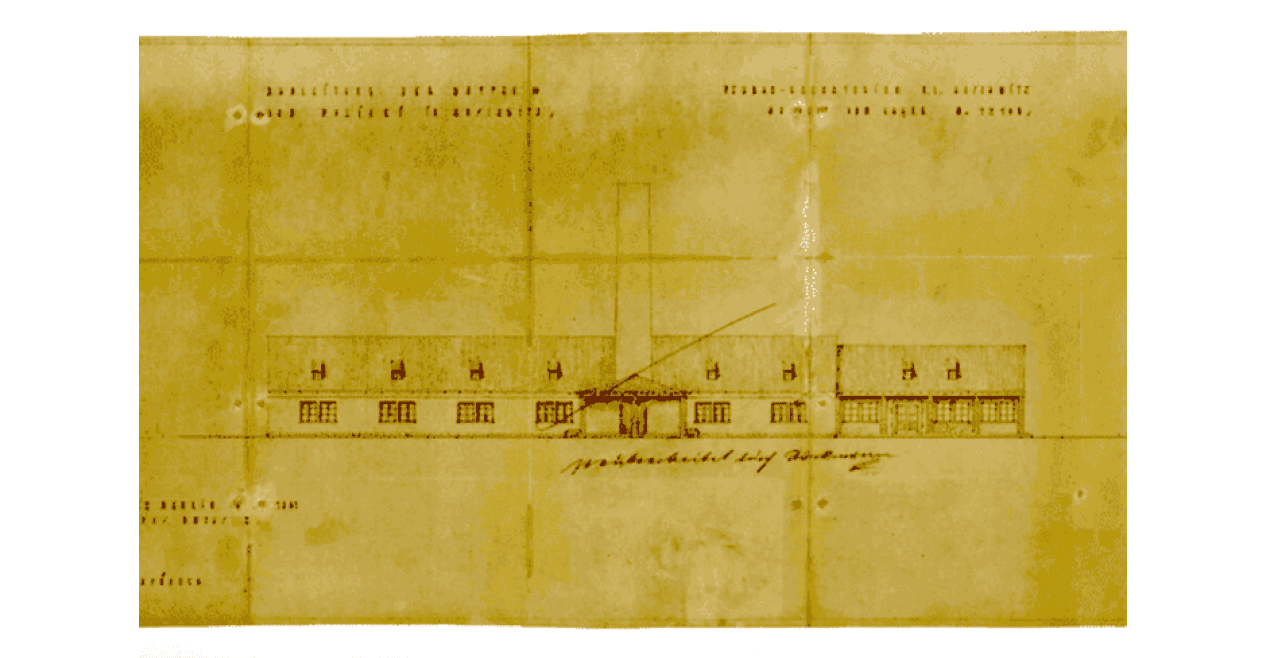
The Auschwitz-Birkenau crematoria whiteprint. Photo courtesy of Elliott Broidy.
{{IMG:2AZt6VXBqhql40uEAoqJz0nSkP0.webp}}
When I first saw the faded whiteprint, an architectural drawing of the earliest design concept for what became Crematoria II and III at Auschwitz-Birkenau, I felt the crushing weight of evil. This piece of paper with its neat geometric lines—so professional, so precise—was proof of the intent to incinerate the corpses of hundreds of thousands of Jewish men, women and children who would be murdered on an industrial scale.
A reminder
I have dedicated much of my philanthropic work to support Jewish organizations and to combat anti-Semitism. I knew immediately that this artifact had to be brought to light, especially in our era of surging Holocaust denial and resurgent anti-Semitism.
That’s why I acquired the whiteprint for $1.5 million, a sum chosen to honor the 1.5 million Jewish children murdered by the Nazis during the Holocaust.
Enduring evidence
The document, drawn by SS architect Walter Dejaco in October 1941, has been authenticated by Robert Jan van Pelt, one of the world’s experts on Auschwitz. Van Pelt has called it “quite literally irreplaceable.”
The whiteprint represents crucial architectural evidence of Nazi extermination infrastructure. It is a tangible link to the systematic planning behind the Holocaust and an irrefutable record of genocidal intent. Physical artifacts such as this provide enduring evidence of the Nazi pursuit of the “Final Solution.”
Yet preservation by itself isn’t enough. The whiteprint must be seen, studied and understood.
For that reason, I intend to exhibit it at various Holocaust museums and institutions dedicated to fighting anti-Semitism before permanently donating it to one such institution. Each viewing will be an opportunity to educate, to remember and to inoculate future generations against denial and distortion.
{{IMG:I3XuKxUdhpni99FHM0Hu0ERk6gY.png|The Auschwitz-Birkenau crematoria whiteprint. Photo courtesy of Elliott Broidy.}}
The proceeds from the acquisition will support an early-childhood curriculum designed to combat extremism and hate before they take root. By emphasizing altruism and empathy in young children, we can build immunity against the dehumanization that makes hatred and ultimately violence possible.
ADVERTISEMENT
‘A particular responsibility’
The whiteprint acquisition is part of a broader commitment.
Working with the Counter Extremism Project, a nonprofit, nonpartisan organization, I helped fund the purchase of the former home of Auschwitz commandant Rudolf Höss. At 88 Legionów Street in Oświęcim, Poland, the house sits directly adjacent to the camp where he oversaw mass murder on a scale that will forever be incomprehensible.
The whiteprint acquisition is part of a broader commitment.CEP has transformed the house into the Auschwitz Research Center on Hate, Extremism and Radicalization (ARCHER) at House 88, which uses the very latest technology to disrupt the shadowy financial networks that extremists use to foment anti-Semitism, extremism and terrorism. What was once the home of a principal architect of genocide now houses scholars, researchers and activists working to fight against the mainstreaming of the evil Höss embodied. I serve as co-chairman of the Fund to End Antisemitism, Extremism and Hate, which helps enable ARCHER’s vital work.
Acute danger
We are living in a time of acute danger. Anti-Semitic incidents have reached levels not seen in generations. Holocaust denial proliferates online, often cloaked in the dishonest guise of “just asking questions,” as it edges ever closer to the mainstream—a harrowing development. The survivors who bore witness to history’s greatest crime will not be alive much longer. And when they are gone, artifacts like the whiteprint, Holocaust museums and organizations like ARCHER will become our primary vehicles for transmitting memory and combating lies.
The Jewish philanthropic community carries a particular responsibility. We cannot shirk it. We must support education that cultivates moral responsibility and seriousness; fund research that exposes and disrupts contemporary forms of anti-Semitism; preserve and display evidence of the Holocaust (in addition to the Hamas-led terrorist attacks in Israel on Oct. 7, 2023, the most devastating massacre since the Holocaust); and build communal institutions that will outlast our lifetimes.
We must confront the most dangerous form of contemporary anti-Semitism: the systematic delegitimization of the State of Israel.
We must push back against those who accuse Israel of committing genocide, a modern-day blood libel that was once confined to the fringes of radical academia, but has escaped containment into the broader discourse around the Israeli-Palestinian conflict.
We must proudly support Israel and champion a strong U.S.-Israel relationship. We can differ in our views of particular Israeli policies, but we must never lose sight of what is at stake: the survival and security of the world’s only Jewish state, home to nearly half the Jews on the planet.
For a small people—there are only about 16 million Jews in the world today, fewer than on the eve of World War II—this work is not optional. Elie Wiesel moved beyond vowing “Never Again” in his 1986 Nobel Peace Prize acceptance speech, insisting instead: “Sometimes, we must interfere.”
Fighting anti-Semitism must be a sustained commitment expressed through action, scholarship and memory.
ADVERTISEMENT
ADVERTISEMENT
Why I acquired the whiteprint of the Auschwitz-Birkenau crematoria
A faded, precise architectural drawing turned out to be an early design for the Auschwitz-Birkenau crematoria. The writer explains why he acquired it.
Elliott Broidy
5 mins read
Published by
JNS
The Auschwitz-Birkenau crematoria whiteprint. Photo courtesy of Elliott Broidy.
{{IMG:2AZt6VXBqhql40uEAoqJz0nSkP0.webp}}
When I first saw the faded whiteprint, an architectural drawing of the earliest design concept for what became Crematoria II and III at Auschwitz-Birkenau, I felt the crushing weight of evil. This piece of paper with its neat geometric lines—so professional, so precise—was proof of the intent to incinerate the corpses of hundreds of thousands of Jewish men, women and children who would be murdered on an industrial scale.
A reminder
I have dedicated much of my philanthropic work to support Jewish organizations and to combat anti-Semitism. I knew immediately that this artifact had to be brought to light, especially in our era of surging Holocaust denial and resurgent anti-Semitism.
That’s why I acquired the whiteprint for $1.5 million, a sum chosen to honor the 1.5 million Jewish children murdered by the Nazis during the Holocaust.
Enduring evidence
The document, drawn by SS architect Walter Dejaco in October 1941, has been authenticated by Robert Jan van Pelt, one of the world’s experts on Auschwitz. Van Pelt has called it “quite literally irreplaceable.”
The whiteprint represents crucial architectural evidence of Nazi extermination infrastructure. It is a tangible link to the systematic planning behind the Holocaust and an irrefutable record of genocidal intent. Physical artifacts such as this provide enduring evidence of the Nazi pursuit of the “Final Solution.”
Yet preservation by itself isn’t enough. The whiteprint must be seen, studied and understood.
For that reason, I intend to exhibit it at various Holocaust museums and institutions dedicated to fighting anti-Semitism before permanently donating it to one such institution. Each viewing will be an opportunity to educate, to remember and to inoculate future generations against denial and distortion.
{{IMG:I3XuKxUdhpni99FHM0Hu0ERk6gY.png|The Auschwitz-Birkenau crematoria whiteprint. Photo courtesy of Elliott Broidy.}}
The proceeds from the acquisition will support an early-childhood curriculum designed to combat extremism and hate before they take root. By emphasizing altruism and empathy in young children, we can build immunity against the dehumanization that makes hatred and ultimately violence possible.
ADVERTISEMENT
‘A particular responsibility’
The whiteprint acquisition is part of a broader commitment.
Working with the Counter Extremism Project, a nonprofit, nonpartisan organization, I helped fund the purchase of the former home of Auschwitz commandant Rudolf Höss. At 88 Legionów Street in Oświęcim, Poland, the house sits directly adjacent to the camp where he oversaw mass murder on a scale that will forever be incomprehensible.
The whiteprint acquisition is part of a broader commitment.CEP has transformed the house into the Auschwitz Research Center on Hate, Extremism and Radicalization (ARCHER) at House 88, which uses the very latest technology to disrupt the shadowy financial networks that extremists use to foment anti-Semitism, extremism and terrorism. What was once the home of a principal architect of genocide now houses scholars, researchers and activists working to fight against the mainstreaming of the evil Höss embodied. I serve as co-chairman of the Fund to End Antisemitism, Extremism and Hate, which helps enable ARCHER’s vital work.
Acute danger
We are living in a time of acute danger. Anti-Semitic incidents have reached levels not seen in generations. Holocaust denial proliferates online, often cloaked in the dishonest guise of “just asking questions,” as it edges ever closer to the mainstream—a harrowing development. The survivors who bore witness to history’s greatest crime will not be alive much longer. And when they are gone, artifacts like the whiteprint, Holocaust museums and organizations like ARCHER will become our primary vehicles for transmitting memory and combating lies.
The Jewish philanthropic community carries a particular responsibility. We cannot shirk it. We must support education that cultivates moral responsibility and seriousness; fund research that exposes and disrupts contemporary forms of anti-Semitism; preserve and display evidence of the Holocaust (in addition to the Hamas-led terrorist attacks in Israel on Oct. 7, 2023, the most devastating massacre since the Holocaust); and build communal institutions that will outlast our lifetimes.
We must confront the most dangerous form of contemporary anti-Semitism: the systematic delegitimization of the State of Israel.
We must push back against those who accuse Israel of committing genocide, a modern-day blood libel that was once confined to the fringes of radical academia, but has escaped containment into the broader discourse around the Israeli-Palestinian conflict.
We must proudly support Israel and champion a strong U.S.-Israel relationship. We can differ in our views of particular Israeli policies, but we must never lose sight of what is at stake: the survival and security of the world’s only Jewish state, home to nearly half the Jews on the planet.
For a small people—there are only about 16 million Jews in the world today, fewer than on the eve of World War II—this work is not optional. Elie Wiesel moved beyond vowing “Never Again” in his 1986 Nobel Peace Prize acceptance speech, insisting instead: “Sometimes, we must interfere.”
Fighting anti-Semitism must be a sustained commitment expressed through action, scholarship and memory.
ADVERTISEMENT
ADVERTISEMENT
Why I acquired the whiteprint of the Auschwitz-Birkenau crematoria
A faded, precise architectural drawing turned out to be an early design for the Auschwitz-Birkenau crematoria. The writer explains why he acquired it.
Elliott Broidy
5 mins read
Published by
JNS
The Auschwitz-Birkenau crematoria whiteprint. Photo courtesy of Elliott Broidy.
{{IMG:2AZt6VXBqhql40uEAoqJz0nSkP0.webp}}
When I first saw the faded whiteprint, an architectural drawing of the earliest design concept for what became Crematoria II and III at Auschwitz-Birkenau, I felt the crushing weight of evil. This piece of paper with its neat geometric lines—so professional, so precise—was proof of the intent to incinerate the corpses of hundreds of thousands of Jewish men, women and children who would be murdered on an industrial scale.
A reminder
I have dedicated much of my philanthropic work to support Jewish organizations and to combat anti-Semitism. I knew immediately that this artifact had to be brought to light, especially in our era of surging Holocaust denial and resurgent anti-Semitism.
That’s why I acquired the whiteprint for $1.5 million, a sum chosen to honor the 1.5 million Jewish children murdered by the Nazis during the Holocaust.
Enduring evidence
The document, drawn by SS architect Walter Dejaco in October 1941, has been authenticated by Robert Jan van Pelt, one of the world’s experts on Auschwitz. Van Pelt has called it “quite literally irreplaceable.”
The whiteprint represents crucial architectural evidence of Nazi extermination infrastructure. It is a tangible link to the systematic planning behind the Holocaust and an irrefutable record of genocidal intent. Physical artifacts such as this provide enduring evidence of the Nazi pursuit of the “Final Solution.”
Yet preservation by itself isn’t enough. The whiteprint must be seen, studied and understood.
For that reason, I intend to exhibit it at various Holocaust museums and institutions dedicated to fighting anti-Semitism before permanently donating it to one such institution. Each viewing will be an opportunity to educate, to remember and to inoculate future generations against denial and distortion.
{{IMG:I3XuKxUdhpni99FHM0Hu0ERk6gY.png|The Auschwitz-Birkenau crematoria whiteprint. Photo courtesy of Elliott Broidy.}}
The proceeds from the acquisition will support an early-childhood curriculum designed to combat extremism and hate before they take root. By emphasizing altruism and empathy in young children, we can build immunity against the dehumanization that makes hatred and ultimately violence possible.
ADVERTISEMENT
‘A particular responsibility’
The whiteprint acquisition is part of a broader commitment.
Working with the Counter Extremism Project, a nonprofit, nonpartisan organization, I helped fund the purchase of the former home of Auschwitz commandant Rudolf Höss. At 88 Legionów Street in Oświęcim, Poland, the house sits directly adjacent to the camp where he oversaw mass murder on a scale that will forever be incomprehensible.
The whiteprint acquisition is part of a broader commitment.CEP has transformed the house into the Auschwitz Research Center on Hate, Extremism and Radicalization (ARCHER) at House 88, which uses the very latest technology to disrupt the shadowy financial networks that extremists use to foment anti-Semitism, extremism and terrorism. What was once the home of a principal architect of genocide now houses scholars, researchers and activists working to fight against the mainstreaming of the evil Höss embodied. I serve as co-chairman of the Fund to End Antisemitism, Extremism and Hate, which helps enable ARCHER’s vital work.
Acute danger
We are living in a time of acute danger. Anti-Semitic incidents have reached levels not seen in generations. Holocaust denial proliferates online, often cloaked in the dishonest guise of “just asking questions,” as it edges ever closer to the mainstream—a harrowing development. The survivors who bore witness to history’s greatest crime will not be alive much longer. And when they are gone, artifacts like the whiteprint, Holocaust museums and organizations like ARCHER will become our primary vehicles for transmitting memory and combating lies.
The Jewish philanthropic community carries a particular responsibility. We cannot shirk it. We must support education that cultivates moral responsibility and seriousness; fund research that exposes and disrupts contemporary forms of anti-Semitism; preserve and display evidence of the Holocaust (in addition to the Hamas-led terrorist attacks in Israel on Oct. 7, 2023, the most devastating massacre since the Holocaust); and build communal institutions that will outlast our lifetimes.
We must confront the most dangerous form of contemporary anti-Semitism: the systematic delegitimization of the State of Israel.
We must push back against those who accuse Israel of committing genocide, a modern-day blood libel that was once confined to the fringes of radical academia, but has escaped containment into the broader discourse around the Israeli-Palestinian conflict.
We must proudly support Israel and champion a strong U.S.-Israel relationship. We can differ in our views of particular Israeli policies, but we must never lose sight of what is at stake: the survival and security of the world’s only Jewish state, home to nearly half the Jews on the planet.
For a small people—there are only about 16 million Jews in the world today, fewer than on the eve of World War II—this work is not optional. Elie Wiesel moved beyond vowing “Never Again” in his 1986 Nobel Peace Prize acceptance speech, insisting instead: “Sometimes, we must interfere.”
Fighting anti-Semitism must be a sustained commitment expressed through action, scholarship and memory.
ADVERTISEMENT
ADVERTISEMENT
Why I acquired the whiteprint of the Auschwitz-Birkenau crematoria
A faded, precise architectural drawing turned out to be an early design for the Auschwitz-Birkenau crematoria. The writer explains why he acquired it.
Elliott Broidy
5 mins read
Published by
JNS
The Auschwitz-Birkenau crematoria whiteprint. Photo courtesy of Elliott Broidy.
{{IMG:2AZt6VXBqhql40uEAoqJz0nSkP0.webp}}
When I first saw the faded whiteprint, an architectural drawing of the earliest design concept for what became Crematoria II and III at Auschwitz-Birkenau, I felt the crushing weight of evil. This piece of paper with its neat geometric lines—so professional, so precise—was proof of the intent to incinerate the corpses of hundreds of thousands of Jewish men, women and children who would be murdered on an industrial scale.
A reminder
I have dedicated much of my philanthropic work to support Jewish organizations and to combat anti-Semitism. I knew immediately that this artifact had to be brought to light, especially in our era of surging Holocaust denial and resurgent anti-Semitism.
That’s why I acquired the whiteprint for $1.5 million, a sum chosen to honor the 1.5 million Jewish children murdered by the Nazis during the Holocaust.
Enduring evidence
The document, drawn by SS architect Walter Dejaco in October 1941, has been authenticated by Robert Jan van Pelt, one of the world’s experts on Auschwitz. Van Pelt has called it “quite literally irreplaceable.”
The whiteprint represents crucial architectural evidence of Nazi extermination infrastructure. It is a tangible link to the systematic planning behind the Holocaust and an irrefutable record of genocidal intent. Physical artifacts such as this provide enduring evidence of the Nazi pursuit of the “Final Solution.”
Yet preservation by itself isn’t enough. The whiteprint must be seen, studied and understood.
For that reason, I intend to exhibit it at various Holocaust museums and institutions dedicated to fighting anti-Semitism before permanently donating it to one such institution. Each viewing will be an opportunity to educate, to remember and to inoculate future generations against denial and distortion.
{{IMG:I3XuKxUdhpni99FHM0Hu0ERk6gY.png|The Auschwitz-Birkenau crematoria whiteprint. Photo courtesy of Elliott Broidy.}}
The proceeds from the acquisition will support an early-childhood curriculum designed to combat extremism and hate before they take root. By emphasizing altruism and empathy in young children, we can build immunity against the dehumanization that makes hatred and ultimately violence possible.
ADVERTISEMENT
‘A particular responsibility’
The whiteprint acquisition is part of a broader commitment.
Working with the Counter Extremism Project, a nonprofit, nonpartisan organization, I helped fund the purchase of the former home of Auschwitz commandant Rudolf Höss. At 88 Legionów Street in Oświęcim, Poland, the house sits directly adjacent to the camp where he oversaw mass murder on a scale that will forever be incomprehensible.
The whiteprint acquisition is part of a broader commitment.CEP has transformed the house into the Auschwitz Research Center on Hate, Extremism and Radicalization (ARCHER) at House 88, which uses the very latest technology to disrupt the shadowy financial networks that extremists use to foment anti-Semitism, extremism and terrorism. What was once the home of a principal architect of genocide now houses scholars, researchers and activists working to fight against the mainstreaming of the evil Höss embodied. I serve as co-chairman of the Fund to End Antisemitism, Extremism and Hate, which helps enable ARCHER’s vital work.
Acute danger
We are living in a time of acute danger. Anti-Semitic incidents have reached levels not seen in generations. Holocaust denial proliferates online, often cloaked in the dishonest guise of “just asking questions,” as it edges ever closer to the mainstream—a harrowing development. The survivors who bore witness to history’s greatest crime will not be alive much longer. And when they are gone, artifacts like the whiteprint, Holocaust museums and organizations like ARCHER will become our primary vehicles for transmitting memory and combating lies.
The Jewish philanthropic community carries a particular responsibility. We cannot shirk it. We must support education that cultivates moral responsibility and seriousness; fund research that exposes and disrupts contemporary forms of anti-Semitism; preserve and display evidence of the Holocaust (in addition to the Hamas-led terrorist attacks in Israel on Oct. 7, 2023, the most devastating massacre since the Holocaust); and build communal institutions that will outlast our lifetimes.
We must confront the most dangerous form of contemporary anti-Semitism: the systematic delegitimization of the State of Israel.
We must push back against those who accuse Israel of committing genocide, a modern-day blood libel that was once confined to the fringes of radical academia, but has escaped containment into the broader discourse around the Israeli-Palestinian conflict.
We must proudly support Israel and champion a strong U.S.-Israel relationship. We can differ in our views of particular Israeli policies, but we must never lose sight of what is at stake: the survival and security of the world’s only Jewish state, home to nearly half the Jews on the planet.
For a small people—there are only about 16 million Jews in the world today, fewer than on the eve of World War II—this work is not optional. Elie Wiesel moved beyond vowing “Never Again” in his 1986 Nobel Peace Prize acceptance speech, insisting instead: “Sometimes, we must interfere.”
Fighting anti-Semitism must be a sustained commitment expressed through action, scholarship and memory.
ADVERTISEMENT
ADVERTISEMENT
Related News

World
U.S. / National
Jews, others protest NYC mayor at Gracie Mansion
Hundreds gather near Gracie Mansion as a Jewish-led coalition presses Gov. Hochul to use a rarely invoked power against Mayor Mamdani.
Debra Nussbaum Cohen
May 27, 2026
World
Israel & Middle East
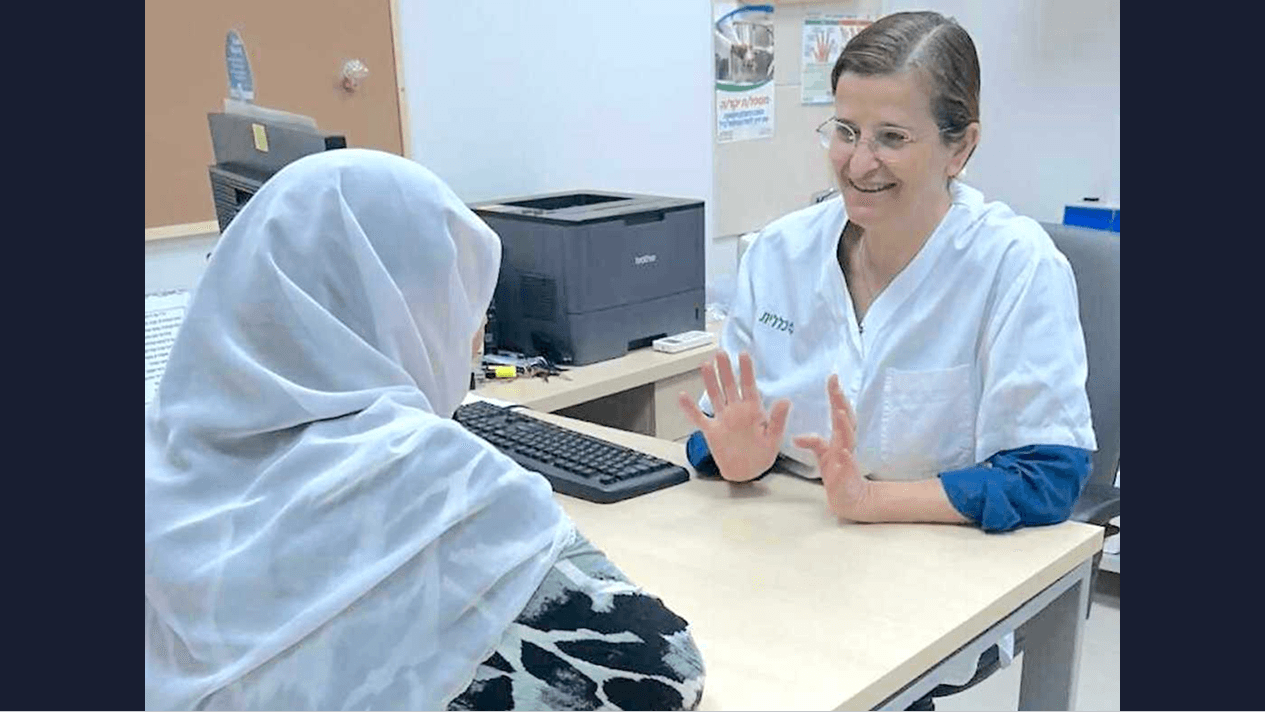
Israel’s first Druze female doctor receives recognition award at ‘Her Stage’ conference
Decades after defying her village to enter medical school, an Israeli gynecologist now sees her three daughters break their own barriers.
The Jewish World Team
May 27, 2026
World
Israel & Middle East
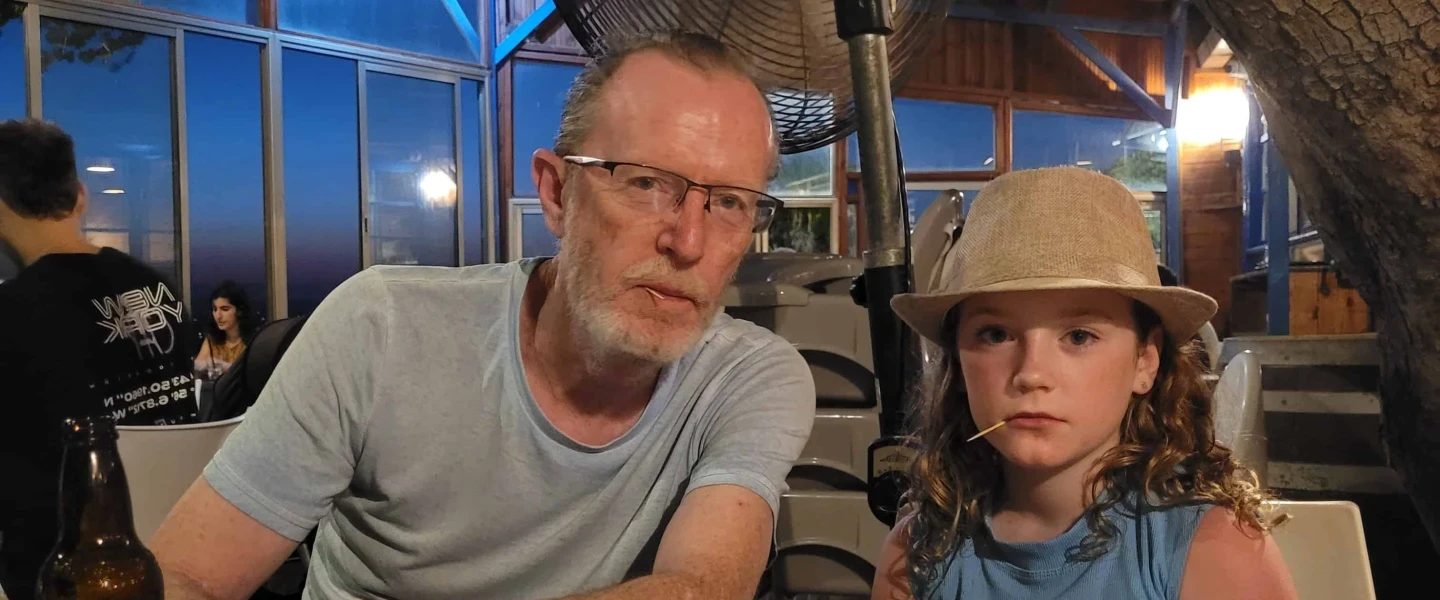
From Gaza captivity to a new beginning, Emily Hand and father prepare to return to kibbutz
Nearly three years after 50 days as a Hamas hostage, an 11-year-old and her father weigh what going home to Be’eri now means.
Amelie Botbol
May 27, 2026
World
U.S. / National
Jews, others protest NYC mayor at Gracie Mansion
Hundreds gather near Gracie Mansion as a Jewish-led coalition presses Gov. Hochul to use a rarely invoked power against Mayor Mamdani.
Debra Nussbaum Cohen
May 27, 2026
World
Israel & Middle East
Israel’s first Druze female doctor receives recognition award at ‘Her Stage’ conference
Decades after defying her village to enter medical school, an Israeli gynecologist now sees her three daughters break their own barriers.
The Jewish World Team
May 27, 2026
World
Israel & Middle East
From Gaza captivity to a new beginning, Emily Hand and father prepare to return to kibbutz
Nearly three years after 50 days as a Hamas hostage, an 11-year-old and her father weigh what going home to Be’eri now means.
Amelie Botbol
May 27, 2026

World
Israel & Middle East
Netanyahu announces intensified strikes on Hezbollah; Washington shows support
After a U.S.-brokered ceasefire frayed, Israel signals a sharper phase against Hezbollah, while a senior U.S. official blames the group entirely.
Mike Wagenheim
May 27, 2026

© 2026 The Jewish World · Since 1965 - The Capital Region's gateway to Jewish life
Designed and Developed by Ta-Da Studios
© 2026 The Jewish World · Since 1965 - The Capital Region's gateway to Jewish life
Designed and Developed by Ta-Da Studios
© 2026 The Jewish World · Since 1965 - The Capital Region's gateway to Jewish life
Designed and Developed by Ta-Da Studios
© 2026 The Jewish World · Since 1965 - The Capital Region's gateway to Jewish life
Designed and Developed by Ta-Da Studios