By Rabbi MORDECHAI RUBIN,
Colonie Chabad and Chabad on Campus at Siena University
As the United States marks 250 years since its founding, we find ourselves reflecting not only on the blessings of liberty, but on the deeper spiritual meaning of freedom itself. This year’s Season of Freedom — the festival of Passover — invites us to look inward and rediscover what freedom is.
In Jewish tradition, Hebrew words are numbers are never arbitrary. Every Hebrew word possesses a numerical value, and the word for “candle,” neir, (נר) equals 250. As America celebrates 250 years, this parallel encourages an exploration of what a candle represents in Torah thought and what it can teach us about personal and national freedom.
The Candle of G‑d
King Solomon writes in Proverbs: The candle (neir) of G‑d is the soul of man.
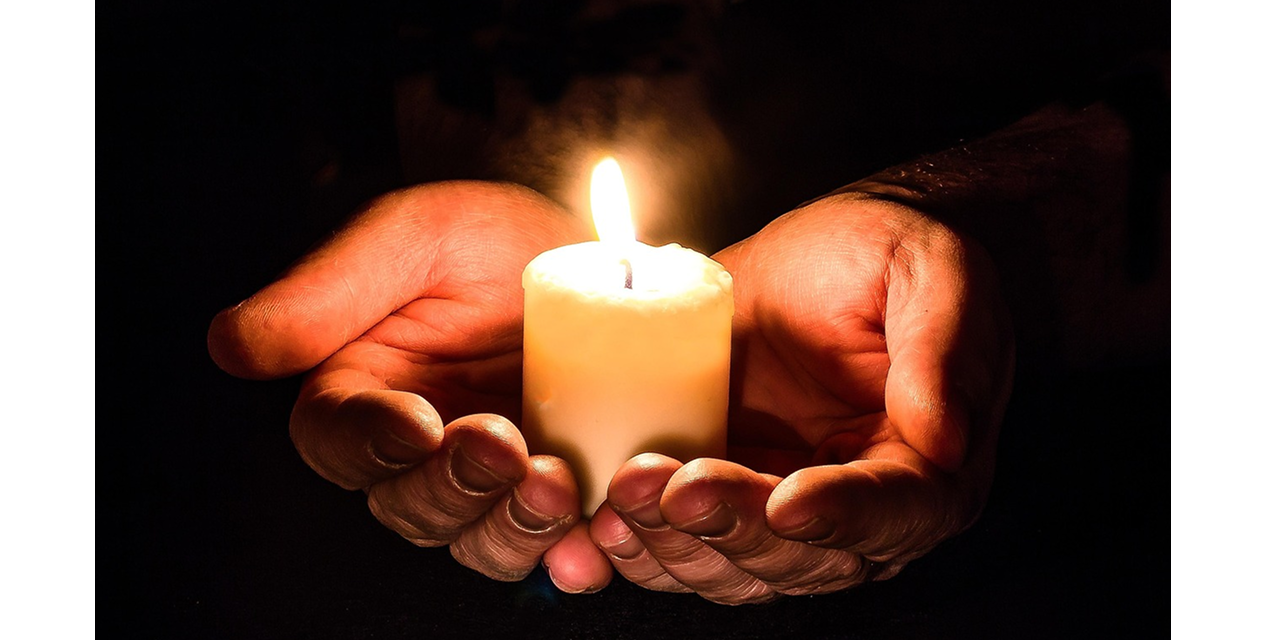
A candle is a metaphor for the soul, a reminder that each of us contains a spark of holiness, a unique flame meant to illuminate the world.
Chasidic teachings expand this idea.
The Rebbe: 248 + 2 = 250
Our sages say that there are 248 imperative mitzvahs in the Torah. These correspond to the 248 limbs as outlined in the Mishnah. Now all mitzvahs are motivated and animated by the two general mitzvahs to love and fear G-d, which can be compared to the two hands of a person.
Thus, explained the rebbe, (The late Rabbi Menachem Mendel Schneerson, known as the rebbe to the Chabad-Lubavitch movement) the candle and the number 250 represents the totality of the mitzvahs, done with the overarching motivation of making this world a beautiful and bright place, where G-d’s presence is felt.


When our emotions and our actions are in sync, the rebbe concludes, a person becomes a radiant “candle of G‑d.”
This notion was has deep roots in Jewish mysticism, including in the teachings of the Maggid of Kozhnitz quoting the “writings” of Arizal.
Body, Spirit and Soul
A different classical source, the Magen Avraham, a classic commentary on the Code of Jewish Law (Rabbi Avraham Gombiner, 17th century, Orach Chaim 610:3), offers another interpretation while discussing the custom of lighting a ner ha‑chaim (24-hour candle for “the living”) lit before the onset of Yom Kippur: “There is a hint in the number of a man’s limbs (248), plus the ruach (spirit) and neshamah (soul), which together equal the numerical value of the word ‘ner’ (250).”
Here, the candle symbolizes the complete human being, body, spirit, and soul united in purpose.
Taken together, these teachings paint a powerful picture:
A candle is not just a flame. It is a symbol of the complete human being — our actions, our emotions, our spirit, and our inner light — all shining outward to bring warmth and goodness into the world.
The candle’s flame offers lessons for all of us:
Four Lessons Of the Candle
1. Strive to grow
A flame always reaches upward. It never settles.
So too, freedom calls on us to grow, to learn, and to lift others. When we rise, we help those around us rise as well.
2. Be multifaceted
A flame glows with layers of color.
It reminds us that people, too, are multifaceted — capable of expressing themselves in many ways, contributing both practically and spiritually, and adapting to the needs of the moment.
3. Give without diminishing
Fire can share its light endlessly. One candle can ignite another without losing any of its own glow.
Generosity works the same way. When we give of ourselves — kindness, time, support — we don’t become smaller. We create more light in the world.
4. Bring light to darkness
A candle is most precious when the room is dark.
Each of us has the ability to bring hope, comfort, and clarity to places where they are needed most.
In moments of challenge, uncertainty, or confusion, even a small act of goodness can transform an entire environment.
America’s Torch
America’s founders envisioned a nation built on faith in one G-d and on the principle of religious freedom — a place where people of all backgrounds could thrive.
The Statue of Liberty, with its torch held high, stands as a symbol of that promise.
It welcomed many millions of people looking for a better life. It was a lighthouse of safety and a new opportunity for freedom for oppressed people. The Jewish nation, especially during the most difficult periods of persecution, benefited greatly from America’s welcoming embrace.
Notice that the climax and epitome of liberty is a flame or torch. Because to be free is to hold a flame of light and direction for oneself and others. It’s not sufficient to just be free to do whatever you want, which is often mistakenly defined as freedom.
The flame’s message: freedom is not only a right, but a responsibility. We are called to shine our light, uplift others, and be a beacon of hope.
As we look toward the future, it’s worth remembering that our individual flames form a collective brightness. When each person contributes their unique spark, the world becomes warmer, kinder, and more vibrant.
As we celebrate both Passover’s Season of Freedom and America’s 250th birthday in July, may we find ways to express gratitude, to share our light openly, and to bring blessing to those around us.
May our inner candles burn strong, illuminating a path toward a brighter future. May our shared light inspire freedom, justice, and peace for all humanity.
Season of Light, Freedom
As we celebrate Passover now, the festival of liberation, and in July America’s 250th birthday, we are to reflect on our own inner flame:
Are we rising upward? Are we illuminating others? Are we bringing warmth where it is needed most?
Are we living as “candles of G‑d,” shining with purpose and goodness?
May our inner candles burn strong, illuminating our homes, our communities, and our nation.
May our shared light inspire freedom, justice, and peace for all humanity.
And may the flame of America — and the flame of every soul — continue to shine brightly for generations to come.