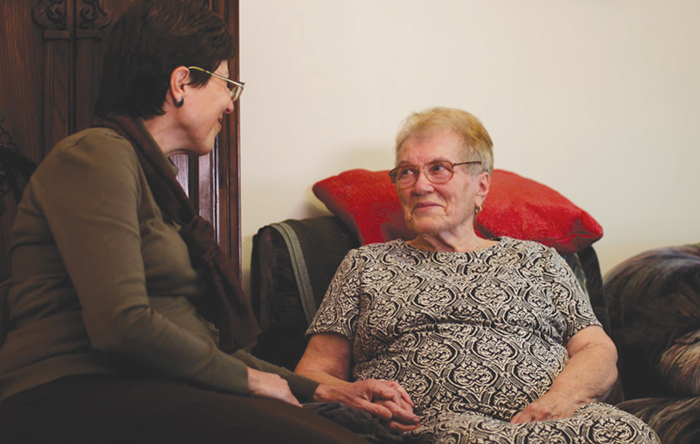
Clara Simon with Alla
A Lifeline in the Capital Region:
Jewish Family Services of Northeastern New York
By Victoria Talbot
When I met recently with Jane Ginsburg, Jewish Family Services (JFS) president and CEO, and Monica Tan, their director of marketing, I was struck by how personal their work is. JFS is not just an agency — it’s a lifeline. Behind every program, every service, and every statistic is a story: an older adult who can still get to the doctor, a Holocaust survivor who feels dignity in aging, a teen counseled for social anxiety.
Talking with Jane and Monica, I could see that JFS’s impact goes far beyond logistics. They provide care, dignity, and the reassurance that no one is alone in his struggles. That is why I believe it’s so important for all of us in the Capital Region to step up — to support, to donate, and to volunteer. Reading this article is more than just learning about what JFS does; it’s a chance to take action and strengthen a network that has served our community for over a century.

A Conversation with Jane Ginsburg, President & CEO at JFS
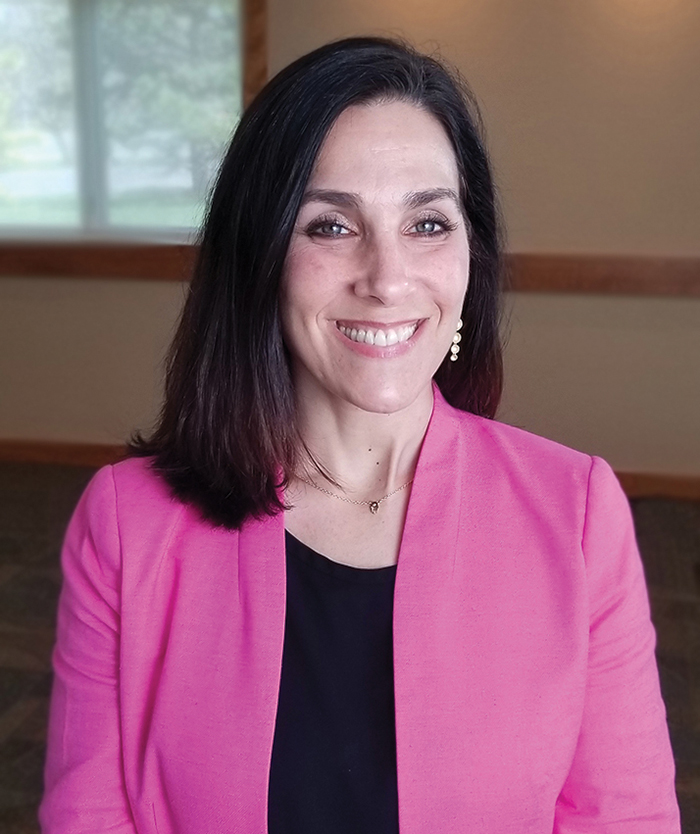
Jane Ginsburg
Jane, can you share a personal story of someone in the Albany Capital Region whose life was changed because JFS stepped in at the right time?
We received a call from a community family whose ailing father needed to be moved from Florida to the Capital Region. They didn’t know where to start: his apartment needed to be packed up and moved, they had to secure transportation to get him here and, once settled, get referrals for home care agencies, and so much more. JFS senior resource specialists worked with a JFS in Florida to manage moving logistics and then helped find resources in the Albany area. Getting their zayde to the area was critical. He wanted to be closer with his family, and they cherished having him at family dinners and holidays, and JFS was able to continue to help by getting him to some of his appointments through JFS’ Project 5 Transportation program.
You are renovating your office space to create the JFS Center for Counseling & Resilience. Why are you building that now?
We have been seeing an increased demand for in-person counseling, and not just for individuals, but for couples and families. People are feeling more stress and pressure, and people are more comfortable seeking help. JFS is seeing people of all ages: young adults struggling with work-life balance, couples coming to resolve conflicts, and we’re seeing more younger children (and their parents! See SPACE below) struggling with behavioral issues. Clinicians hold regular support groups on grief and loss, caregiver stress, and coping with change. Our new Center will have five clinician offices and a room to conduct group sessions.
Counseling and support are not limited to the physical center at 184 Washington Avenue Extension. We have a teen mental health initiative to help teens (and the adults who work with them) who are struggling with the heightened pressures that come from social media and an increase in both isolation and aggression. Referred to as PREsilience, this model helps address mental health concerns before they become more severe.
JFS clinicians also have regular hours at the Capital Region Jewish day schools. Children can meet our staff for support, and attend classroom groups that help build self-esteem and develop problem-solving skills. Parents often need guidance, too. Our clinicians are trained in a program called SPACE (Supportive Parenting for Anxious Childhood Emotions). This evidence-based treatment for childhood anxiety focuses on modifying parental behavior rather than the child’s.
Many older Jewish adults throughout the Capital Region live on very limited incomes. Can you tell us about a senior who has relied on JFS for food, transportation, or other essentials — and what that support has meant?
There is a woman who is fiercely independent but has increasing mobility difficulties. She was unable to get to the kosher Market 32 in time for Passover. This client was already utilizing JFS transportation to get to medical appointments but was embarrassed that she did not have food for the holiday. Her rabbi intervened and called JFS. Since then, we have continued to take her shopping so she can always have the food she wants.
Transportation is something many of us take for granted. Could you describe someone who depends on JFS rides to get to appointments or even the grocery store.
Last year, JFS staff and volunteers provided more than 2,100 rides to older adults to help them maintain their independence. Many clients rely on JFS for their weekly appointments, to dialysis, physical therapy – or the grocery store. We can be there for just a short-term need following a surgery or a sprained ankle, or for the long-term.
JFS plays a vital role in supporting Holocaust survivors. Is there a particular story of resilience or dignity that stays with you?
There are so many. Clara Simon, our senior resource specialist and truly devoted care manager to so many survivors, connected us with a couple who I had the privilege of spending time with earlier this year. Not only had they been helped by JFS in the 1990s when they arrived in Albany, but we have been able to provide countless hours of help with Claims Conference and related paperwork and navigating the proverbial system, but also provide with groceries, rides and support when the wife had unexpected surgery. The husband would not have been able to stay on his own, so we helped find a temporary caregiver to help in the home while the wife recovered. Most recently, they had a major home appliance die, and through our partnership with KAVOD SHEF to provide financial assistance, we were able to help there, too.
Food insecurity continues to rise in our community. Can you share a story of a family or individual in the Capital Region who received food through JFS at a moment when they truly didn’t know how they’d manage?
We received a referral of a man in his 90s who has no family in the area and couldn’t shop or prepare his own meals beyond a bowl of cereal or a PB&J. Now, he is getting meals and one of our volunteers shops for him every other week. Having regular contact with the same volunteer allows us to “have eyes” on this client so we know how he is doing.
Weekly contacts with volunteers can be lifesaving. Delivering groceries, a volunteer discovered a client had fallen, called an ambulance, and got help. JFS staff followed up with the client and her family. Our care managers are trained in conducting home safety assessments. We coordinated installation of grab bars and removed area rugs to promote safety.
Behind the scenes, JFS helps people with complicated systems — from healthcare to benefits. Could you walk us through an example of how your team guided someone through a difficult process, and the relief it brought?
Many of our clients are simply overwhelmed by the amount of paperwork and follow–up required to attend a routine medical appointment, much less comprehending and adhering to doctor’s orders. One of our care managers started working with a woman in her mid-60s. She was recently retired and needed help figuring out Social Security and Medicare benefits. We helped her sort through the applications and required documentation and got her enrolled. She also had limited computer skills, so we worked together and got her signed up in all her doctors’online portals. The woman had been afraid to take this step but once she learned how simple and easy it is to make online appointments, refill medications, and message her doctor, she’s feeling extremely relieved, and that she’s got a new lease on life! In many cases, we give people the skills and confidence to manage their own affairs.

Roz Foote getting a ride from a Project 5 volunteer
Volunteers are an essential part of your success. Do you have a favorite story about one of your volunteers and the difference he or she made in someone’s life?
My favorite story is often repeated: I run into volunteers at community events, and they can’t stop talking about how much they adore their passengers or grocery shopping recipients. They kvell about their meaningful chats and can’t believe how appreciative the clients are and how much they love the time they spend with the clients. It’s honestly what I hear all the time — and when they kvell, I kvell.
The needs in the Albany Capital Region are always evolving. Can you tell us about a time when JFS had to adapt quickly to meet new or urgent demands?
The pandemic sent our world spinning, of course. As things shut down, JFS stepped up. But this is what JFS does. We see a problem and figure out how to pivot to fix it. Another issue that we’ve seen more of is the increased demand for counseling, in both traditional therapy and non-traditional programs, and mental health trainings for youth-facing staff. In the past two years, we’ve tripled our clinical staff and are gearing up to open our Center for Counseling and Resilience.
For Jewish World readers, what is the most direct way they can help right now — whether through donations, volunteering, or even advocacy?
JFS serves the community, but we need our community to do what we do. While we receive support from grants, donations and fees for some services, most of the services we provide are free or the fees don’t cover the costs. Our most urgent need is philanthropic donations from individuals and businesses. This can be done now or in the future as part of a bequest. We are also always looking for volunteers to further the reach of our work. There are opportunities to get involved as little or as much as you want. Lastly, we are here for you. If you or a family member is struggling, just call. Our mission is to provide compassionate human services, and we do that!
A Call to Action
What makes Jewish Family Services extraordinary is not just the scale of their work but the intimacy of it. They don’t just deliver groceries; they deliver dignity. They don’t just provide a ride; they provide independence. They don’t just counsel; they restore hope.
As we enter the Jewish New Year, let’s commit to strengthening this lifeline. You can donate. You can volunteer. You can even make a difference by subscribing to The Jewish World and participating in our community initiatives that benefit JFS.
The bottom line is: JFS ensures that no one in the Capital Region faces hardship alone. And that’s something worth supporting — together.
How to Help JFS in the Capital Region
- Donate online: jfsneny.org/donations
- Volunteer: Sign up to drive, deliver food, or provide companionship.
- Call JFS: (518) 482-8856. Option 0
- Mail contributions: Jewish Family Services, 184 Washington Ave. Extension, Albany, NY 12203
Together, we can keep this lifeline strong.
Meeting Urgent Needs,
Every Day
JFS has been serving the Capital Region for more than 170 years. Their services address the realities many of our neighbors face:
- Counseling & Guidance – From children to older adults, JFS provides therapy and emotional support, building resilience and stability at their new Center for Counseling & Resilience and throughout the community offering creative approaches to mental health, at schools, synagogues, organizations, and on site at camps and community events
- Older Adults & Holocaust Survivors – JFS provides resources and guidance – in-person or over the phone — to help older adults age well and safely. Through transportation, wellness and social programs in the Albany NNORC (Neighborhood Naturally Occurring Retirement Community) and care management, JFS helps build resilience and fosters independence. Holocaust survivors, including those from the former Soviet Union who fled Nazi persecution, receive tailored care management support and financial assistance.
- Transportation & Access – Hundreds of older adults rely on JFS staff and volunteer drivers to get to doctor appointments, grocery stores, and community activities through Project 5. Without this, many would be isolated.
Advocacy – Community members turn to JFS care managers to help them navigate confusing healthcare systems and understand benefits like Medicare and Medicaid.
Food Security – JFS has a corps of volunteers to shop and deliver groceries and prepared kosher meals, so everyone gets fed.
These services are lifesaving. But what makes JFS unique are the stories — the real people whose lives have been changed because someone from JFS showed up.