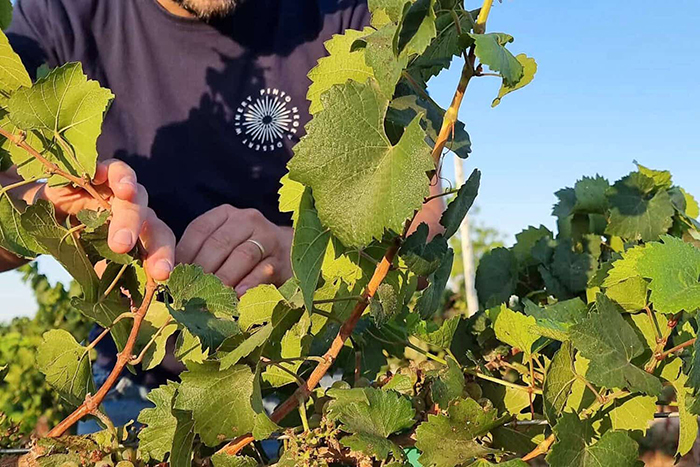
David Pinto inspects his Pinto Winery’s Chardonnay white wine grapes at the start of harvest season on July 19, 2022 in the Kerem Yerucham vineyard in Israel’s Negev Desert. Photo courtesy of David Silverman/Getty Images.
JNS
On Oct. 7, 2023, everything changed for David Pinto.
The co-founder and CEO of Pinto Winery was vacationing in northern Israel, far from his home in Yerucham in the country’s south. But when Hamas brutally infiltrated Israel that morning, Pinto—an IDF officer with the rank of major—was immediately called up to serve in the reserves.
It took him a whole day to reach his home, with roads shut down across the country. He gathered his belongings, left his wife and daughters in Jerusalem and spent 170 days of the next 22 months fighting for Israel’s survival.
Dream Put On Hold
The timing couldn’t have been worse for Pinto Winery, which launched in 2020. The war struck a significant financial blow to the young business, derailing its ambitious plans for growth—including opening a flagship visitor center.


“It was not easy,” Pinto told JNS. “We had to reinvent ourselves.”
Instead of expanding across Israel, the company pivoted to exports. Despite complex global markets, Pinto said the family-run winery—now producing around 100,000 bottles annually—managed to sell its entire supply. Still, with limited staff and resources, not everything ran smoothly.
“We’re a small family business, and we couldn’t manage everything,” he said. “There were many processes that were not seen through and had to wait.”
The biggest dream put on hold was opening the visitor center in Yerucham. Pinto said he ran out of funds and lacked the manpower to navigate the bureaucracy required to complete the project. “We were set back by a year, which is kind of dramatic,” he said. But the family didn’t give up. The Pintos—a philanthropic family who launched the winery as an impact investment to boost Yerucham’s economy and image—remained focused on their main mission.
Desert Wine?
“Our mission is to sell top-quality wines from the desert because of the desert, not despite it,” Pinto explained. “People talk about terroir. The desert is so extreme—325 days of sun a year and only 80 millimeters of rain annually. Vines shouldn’t grow here. But we make them grow because we’re crazy—and because we have access to water to irrigate. Wines from the desert are very special. The whites are crisp, rich and beautiful. The reds are spiced and fruitful.”
Pinto Winery for the first time, participated in the recent Israel Museum Wine Festival in Jerusalem. While Pinto wines are already available in select stores in the Holy City, the company is now making a big push to reach the broader kosher wine-drinking community.
“We see the festival as a great opportunity for people to really get to know us, to know the wines and what we can do,” Pinto said. “Now we are looking forward and trying to be optimistic.”
.
Mount Odem Winery, located just two kilometers (1.2 miles) from the Syrian border and seven kilometers (4.3 miles) from Lebanon also was at the Israel Museum Wine festival. It is Israel’s northernmost and highest-elevation winery.
Grapes Couldn’t Wait
Yaara Alfasi Biadgalin, vice president of marketing and export for Mount Odem, said the winery barely paused operations since the war began. Her parents founded Mount Odem when she was a child.
On Oct. 7, the winery was in the middle of its annual harvest. Her two older brothers—Adam, the winemaker, and Yishai, the vintner—were both called to reserve duty, along with her husband, who manages the agricultural department, and the company’s CEO. Alfasi Biadgalin was seven months pregnant with her third child.
“It was a tough spot since all of our vineyards were declared a military closed area and we could not harvest them,” she recalled.
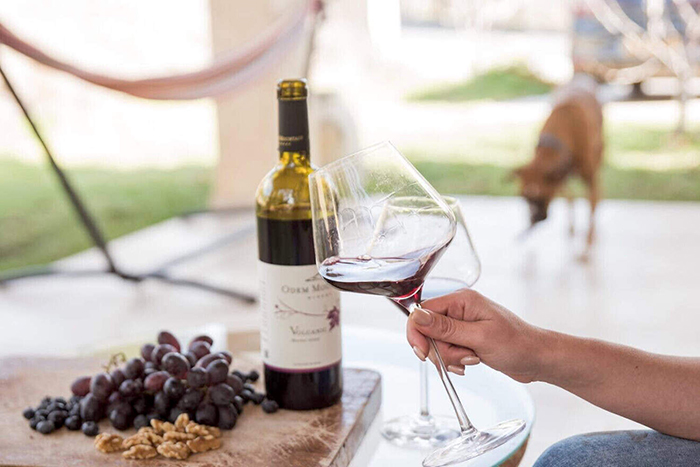
Mount Odem Winery is one of more than 25 Israeli wineries, which took part at the August Jerusalem Wine Festival. Photo courtesy of Nimrod Cohen Nimco.
Reopens Visitor Center
Almost all of the winery’s employees had either been drafted or evacuated. But the grapes couldn’t wait.
“We knew we had to harvest the grapes or everything would be lost,” she said.
Ten days into the war, the family secured permission to return to their vineyards in the Valley of Tears, just 500 meters from the Syrian border. Determined not to lose the season, they handpicked the grapes themselves, one by one, and produced the 200,000 bottles they had committed to for the year.
About 45 days later, Alfasi Biadgalin made another bold decision: to reopen the winery’s visitor center. “Even if no one would come, we did it for ourselves,” she told JNS. “We opened this winery when I was 12 years old. If we closed, someone else was winning the war—and it wasn’t us.”
She cleaned off the shelves and reopened the doors. At first, the only visitors were IDF soldiers stopping by for a glass of wine or a hot coffee to warm up. Then came families visiting their homes in the North. Eventually, as more residents returned, the country followed—and so did the wine lovers.
She noted that some rockets did fall in the vineyards, but no one was injured, and the damage was minimal. The winery pressed on.
Resilience
What stood out most to her during this time was the people’s resilience in Israel’s northern region.
“You don’t think about the consequences. I stayed the whole time,” she said. “The people of the North are very brave. I didn’t realize it then, but you can now see how people in the North and South stood together—with each other and their land.”
Although Odem Winery has often participated in the Jerusalem festival, Alfasi Biadgalin admitted that this year felt different.
Now, more than ever, she believes it’s essential to support the Israeli people of the periphery—winemakers and farmers who have held the line under unimaginable pressure.
“