The Hayyim and Esther Kieval Institute for Jewish-Christian Studies at Siena University will hold its annual colloquium on Sunday, Nov. 2, at 3 p.m., in Key Auditorium/Roger Bacon 202, according to the new Institute director, Holly J. Grieco. The program is free and open to the community.
Dr. Paula Fredriksen and Dr. Margaret Mitchell will talk on “Paul, Judaisms and Christianities,” and will discuss Fredriksen’s book, Ancient Christianities: The First Five Hundred Years.
Fredriksen is a fellow of the American Academy of Arts and Sciences, is Aurelio Professor of Scripture emerita at Boston University, and Distinguished Visiting Professor emerita in the Department of Comparative Religions at the Hebrew University of Jerusalem, which awarded her an honorary doctorate in 2018.
Educated at Wellesley College, Oxford University, and Princeton University, she has published on the social and intellectual history of ancient Christianity, and on pagan-Jewish-Christian relations in the Roman Empire.
Author of Augustine on Romans (1982) and From Jesus to Christ (1988; 2000), her Jesus of Nazareth, King of the Jews won the 1999 National Jewish Book Award. In a recent study, When Christians Were Jews (2018), she reviews the Jesus movement’s Jewish messianic message in the context of ancient Mediterranean culture, politics, and power.
Mitchell is the Shailer Mathews Distinguished Service Professor of New Testament and Early Christian Literature of the University of Chicago Divinity School and College. She researches New Testament and early Christian writings through the end of the fourth century. She analyzes how early Christians developed a literary and religious culture that was embedded in Hellenistic Judaism and the wider Greco-Roman world.
Mitchell, who studies the Pauline letters, the poetics and politics of ancient biblical interpretation, and the intersection of text, image, and artifact in the fashioning of early Christian culture, is working on The Letters of Paul: A Biography, and has been studying the newly rediscovered Greek homilies on the Psalms by Origen of Alexandria, as well as Rev. Dr. Martin Luther King, Jr.’s “Letter of Paul to American Christians.”


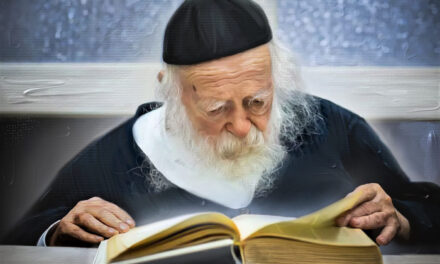
Rabbi at Albany’s Temple Israel for 31 years, founding director of the Kieval Institute, Herman Hayyim Kieval was born in Baltimore, Md., in 1920 to Sarah and Isadore Kieval. He attended public school and Hebrew school in Baltimore. Kieval received a bachelor’s degree from Johns Hopkins University in 1939, was ordained and received a master’s degree from the Jewish Theological Seminary in 1942, and earned a doctorate in Hebrew literature at the Seminary in 1977. After Kieval’s ordination he led Congregation Beth Judah in Ventnor, NJ, where he remained from 1942 to 1944.
In 1944, Kieval enlisted in the United States Army as a chaplain. After a year of training and serving in Hawaii and Okinawa, Kieval became the first Jewish chaplain of the Army of Occupation in Korea. He served in Korea from 1945 to 1946, attaining the rank of captain. One of his duties was to edit Kol Korea (Voice of Korea). After his army service, Kieval returned to the United States and to the pulpit, serving in Grand Rapids, Mich., at Congregation Ahavas Israel from 1946 to 1950. In 1950, he moved to a pulpit in Pittsburgh, Congregation Beth Shalom, where he served until 1954. In 1955 he joined Temple Israel in Albany, where he served as rabbi until his retirement in 1986. He was rabbi emeritus there until his death in 1991.
From 1958 to 1980, Kieval taught Jewish liturgy at the Jewish Theological Seminary. In 1959, the United Synagogue of America published the first volume of his major study The High Holy Days, which deals with the prayerbook for Rosh Hashanah. Kieval started a second volume, about Yom Kippur. He also wrote articles on the liturgy for the Encyclopedia Judaica, and helped edit several prayerbooks.
Kieval also taught at the State University of New York at Albany; St. Michael’s College, Winooski, Vermont; Notre Dame University; and Princeton Theological Seminary.
In 1983, Kieval established the Jewish-Christian Institute of Siena College. He ran colloquia there on interfaith issues and was a guest lecturer in many organizations on this topic.
Kieval received honorary doctorates from Baltimore Hebrew College, 1969; Jewish Theological Seminary, 1971; and Siena College, 1974. Siena College, additionally, held a colloquium in Kieval’s honor following his death.
* * *
Holly J. Griecothe, new director of the Kieval Institute, received a bachelor’s degree in chemistry and history from the University of Wisconsin-Madison. She received a doctorate in medieval history from Princeton University in 2004, for a dissertation entitled “A Dilemma of Obedience and Authority: The Franciscan Inquisition and Franciscan Inquisitors in Provence, 1235-1340.” She specializes in the history of the medieval Franciscan Order, with interests in the development of the Order’s charism; Franciscan inquisitors; and Franciscan saints. In 2012, she published The Boy Bishop and the ‘Uncanonized Saint: St. Louis of Anjou and Peter of John Olivi as models of Franciscan Spirituality in the Fourteenth Century, that seeks to understand the rise of the cult of the Franciscan Louis of Anjou and his eventual canonization in the context of the unofficial cult of a Franciscan contemporary, the theologian Peter of John Olivi.
A recent article, “‘In some way even more than before’: Approaches to Understanding St. Louis of Anjou, Franciscan Bishop of Toulouse,” suggests using writings on prelacy and evangelical states of perfection by two Franciscan theologians, Bonaventure of Bagnoregio and Peter of John Olivi, to illuminate the ways in which Louis of Anjou understood his roles as a Franciscan and as a bishop. Currently, she is completing a book project on Franciscan inquisition and beginning research on Franciscan spiritualities and theologies of work in the Later Middle Ages.
Peter S. Zaas, Ph.D., was born in Cleveland, Ohio, and educated at the Cleveland College of Jewish Studies, Oberlin College, The University of Chicago, and Duke University. At the University of Chicago he earned master’s and doctorate in the Department of New Testament and Early Christian Literature, writing his doctoral dissertation on the communication of moral language in the letters of Paul. After teaching for three years at Hamilton College, he joined the religious sudies faculty at Siena in 1982.